Blog

+86 187 1949 7792 / +86 153 6091 1768
Oct. 14, 2026
Before comparing their performance, it is important to understand the basic characteristics of these three materials.
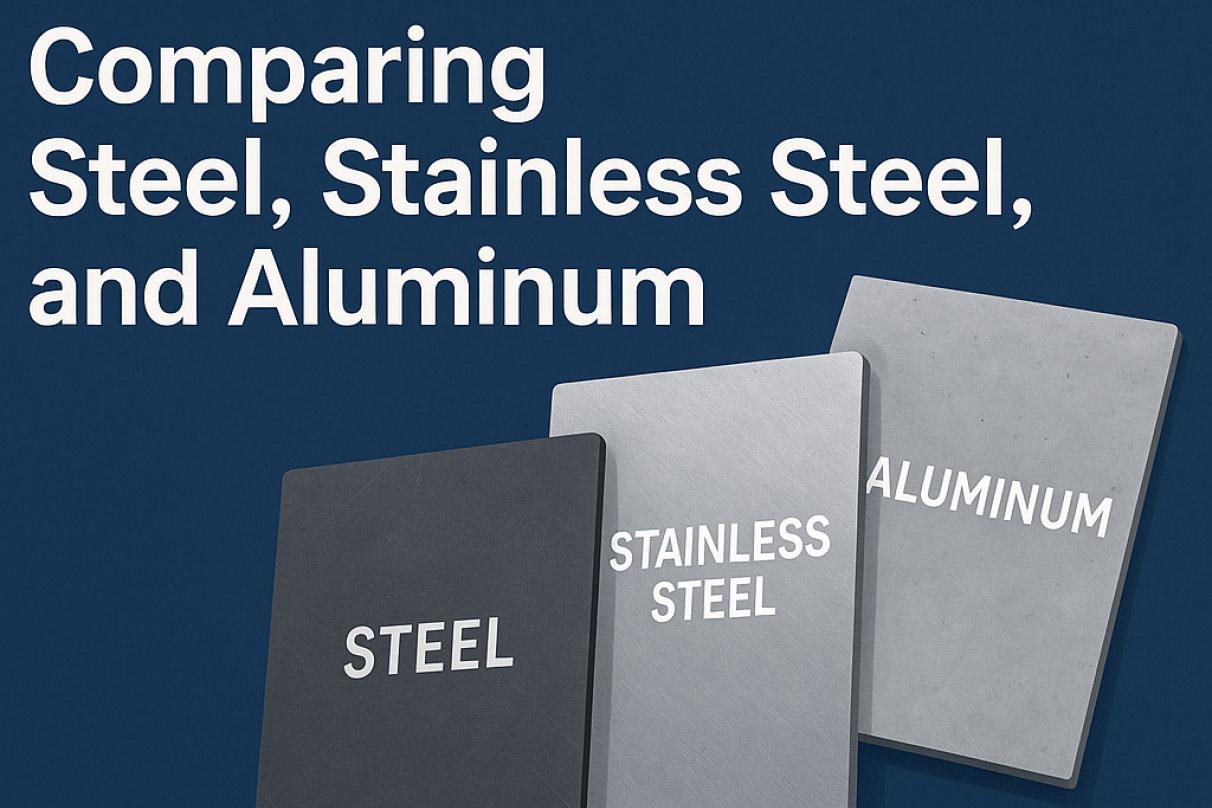
Steel is an iron-based alloy that typically contains carbon and may include other alloying elements. It is widely used in furniture manufacturing because of its strength, versatility, and relatively economical material cost.
Steel components can be laser-cut, punched, bent, welded, and finished in various ways. These manufacturing processes make steel suitable for both simple structural frames and complex sheet-metal furniture designs.
Common applications include:
Metal dining table legs and frames
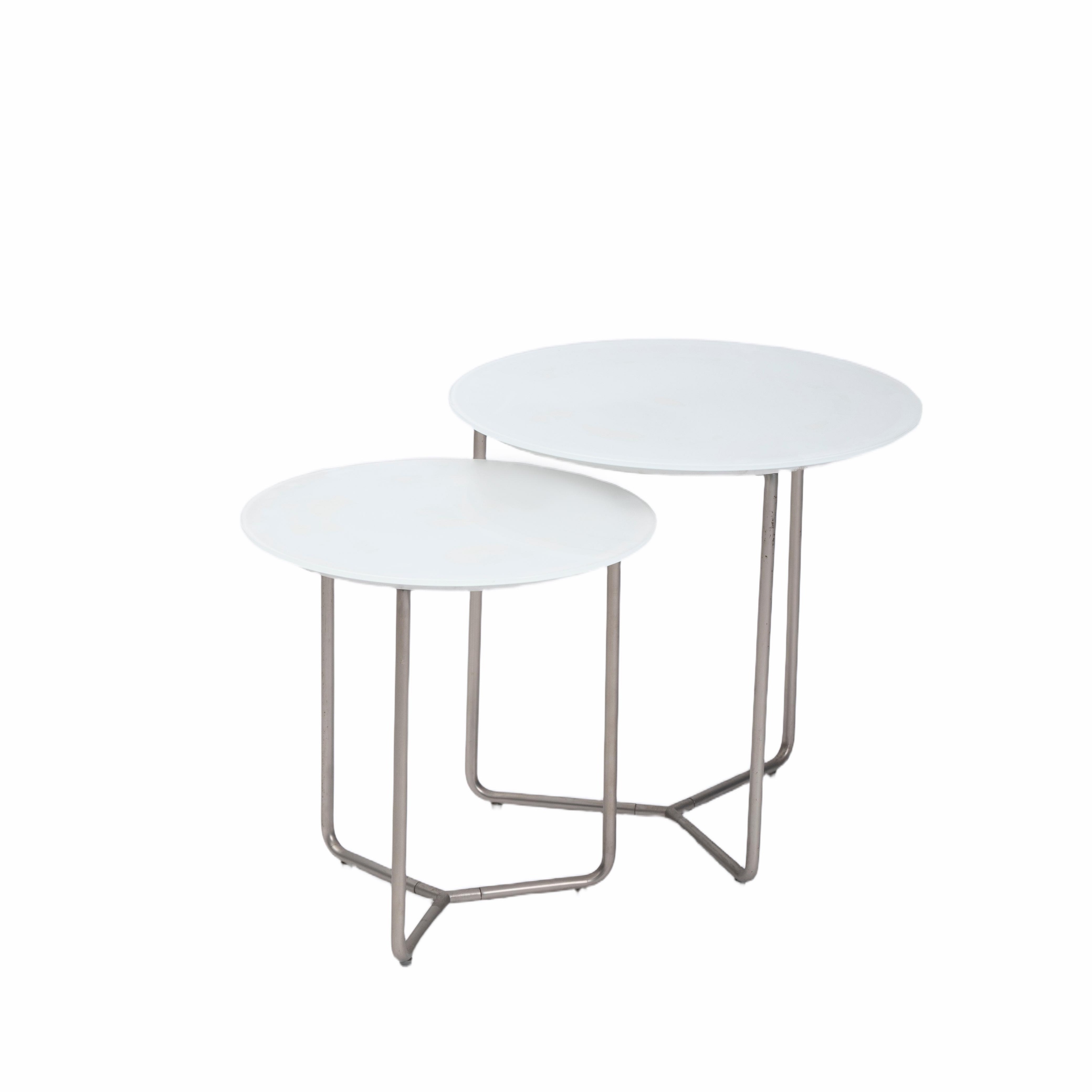
Coffee tables and side tables
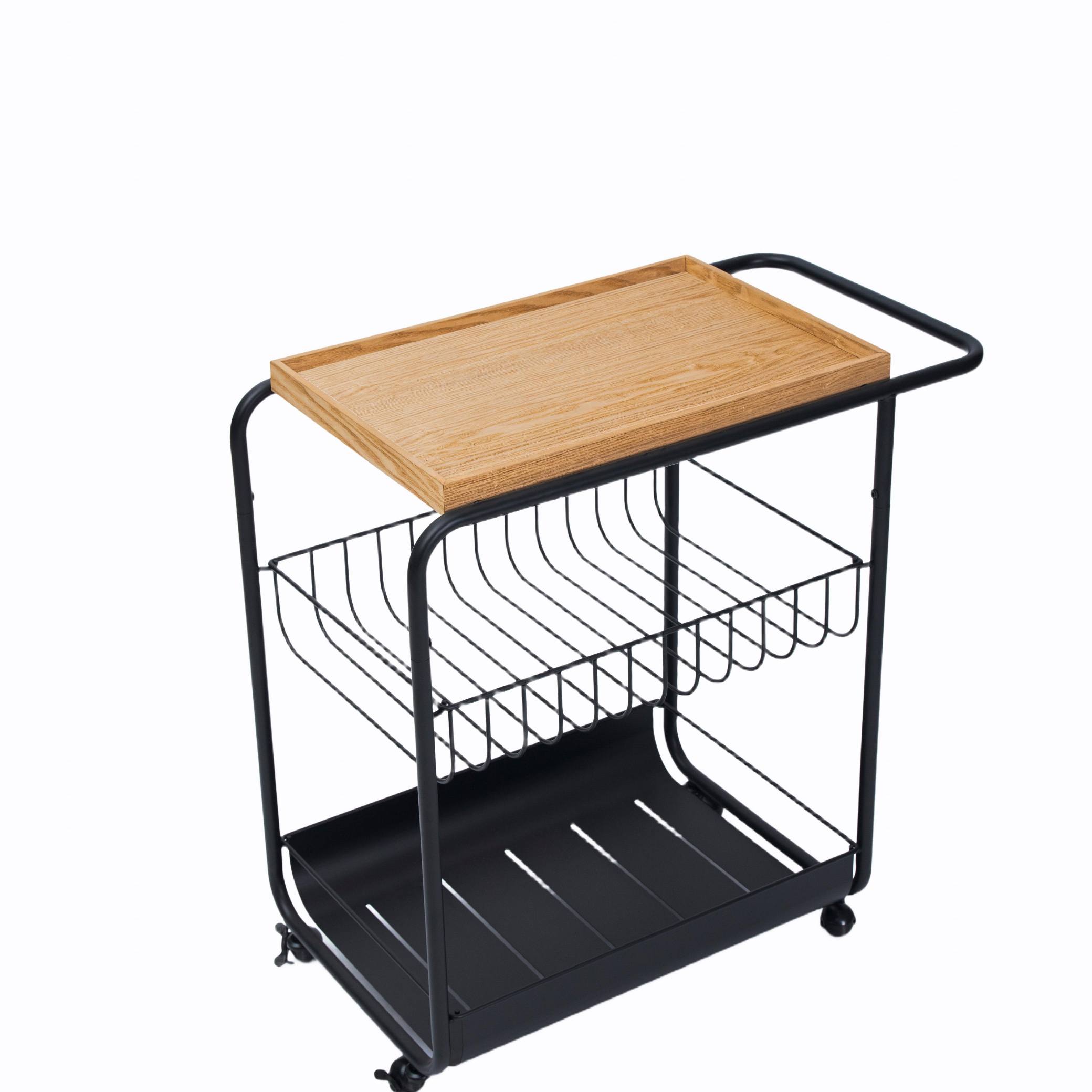
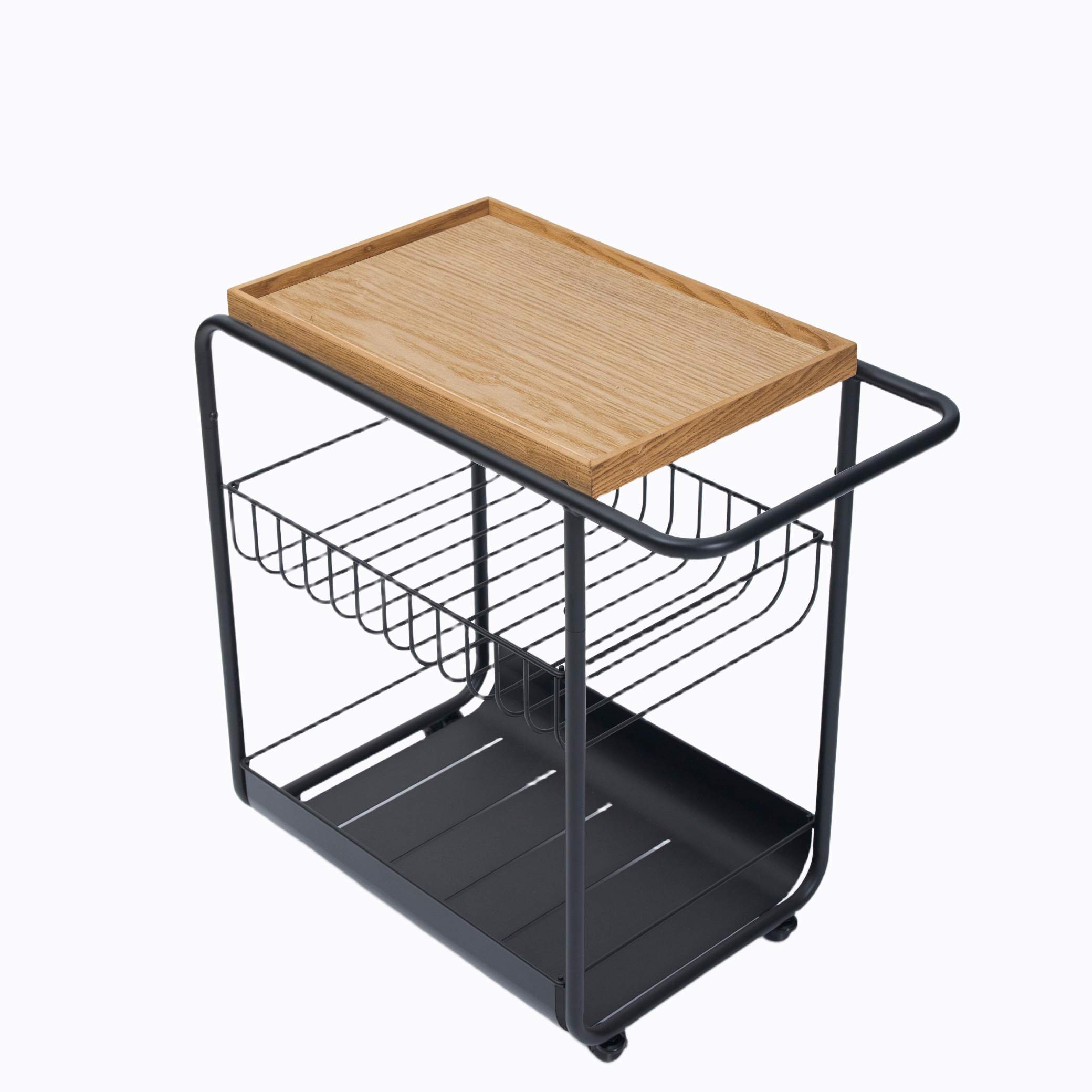
Bedside cabinets and storage furniture
Shelving systems and modular furniture
Office and commercial furniture
With appropriate surface treatments, such as powder coating, steel furniture can achieve a wide range of colors, textures, and finishes.
However, untreated carbon steel is susceptible to rust when exposed to moisture. Proper surface preparation and protective coatings are therefore essential for long-lasting performance.
Stainless steel is an iron-based alloy containing chromium, which helps form a protective passive layer on the surface. This layer provides significantly better corrosion resistance than ordinary carbon steel under many conditions.
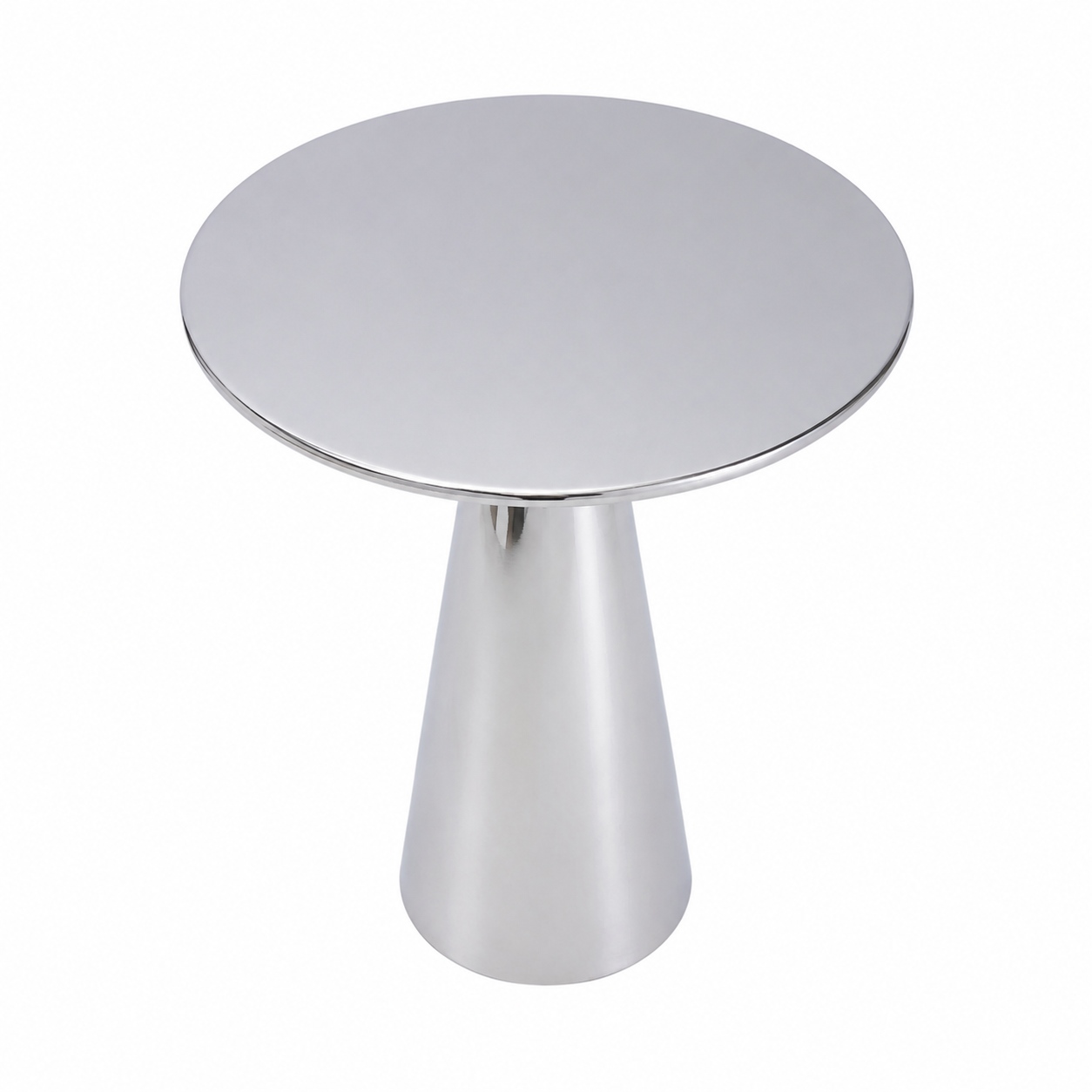
Stainless steel is often selected for furniture that requires a refined appearance, easier cleaning, or improved resistance to moisture.
Common applications include:
Premium dining tables and side tables
Contemporary kitchen and hospitality furniture
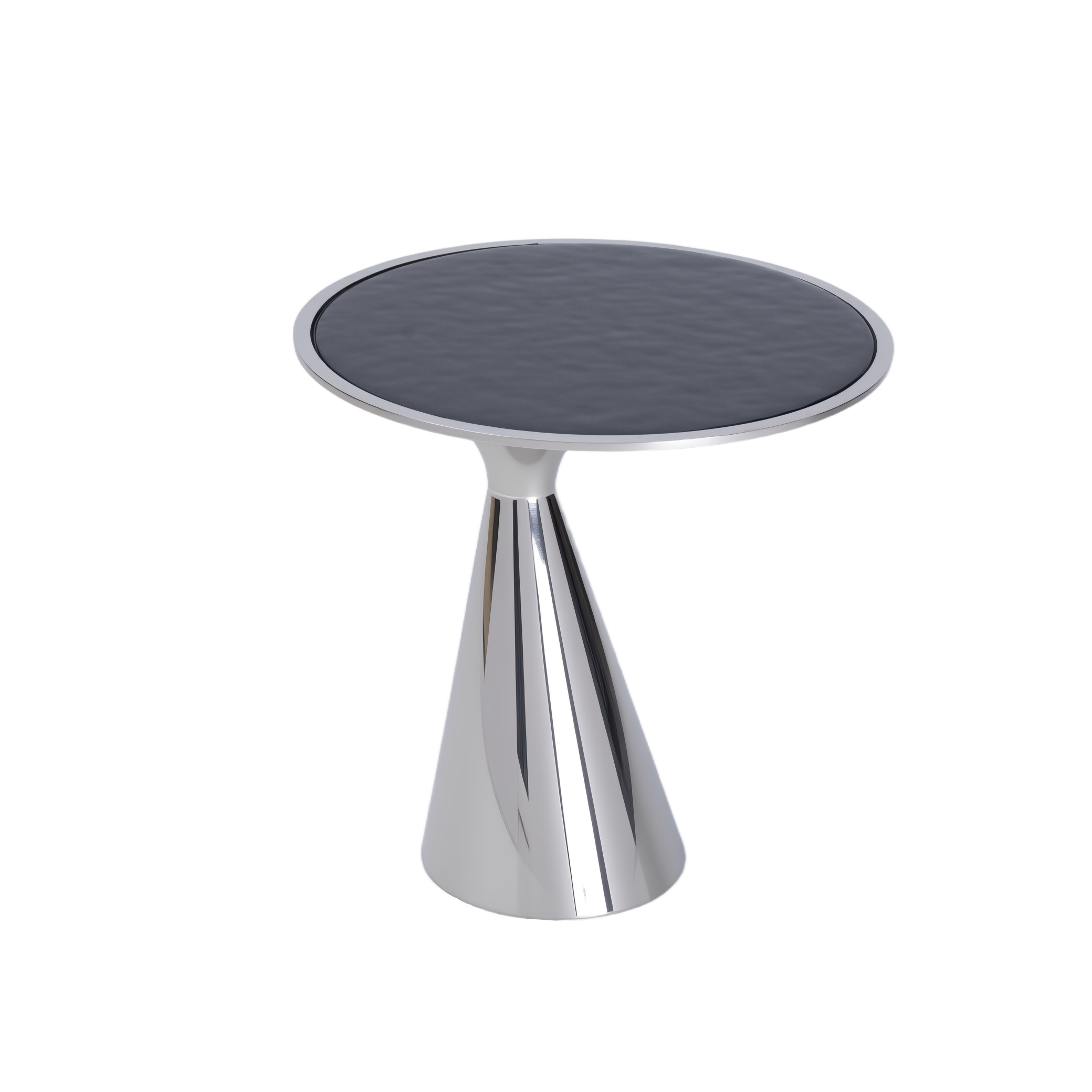
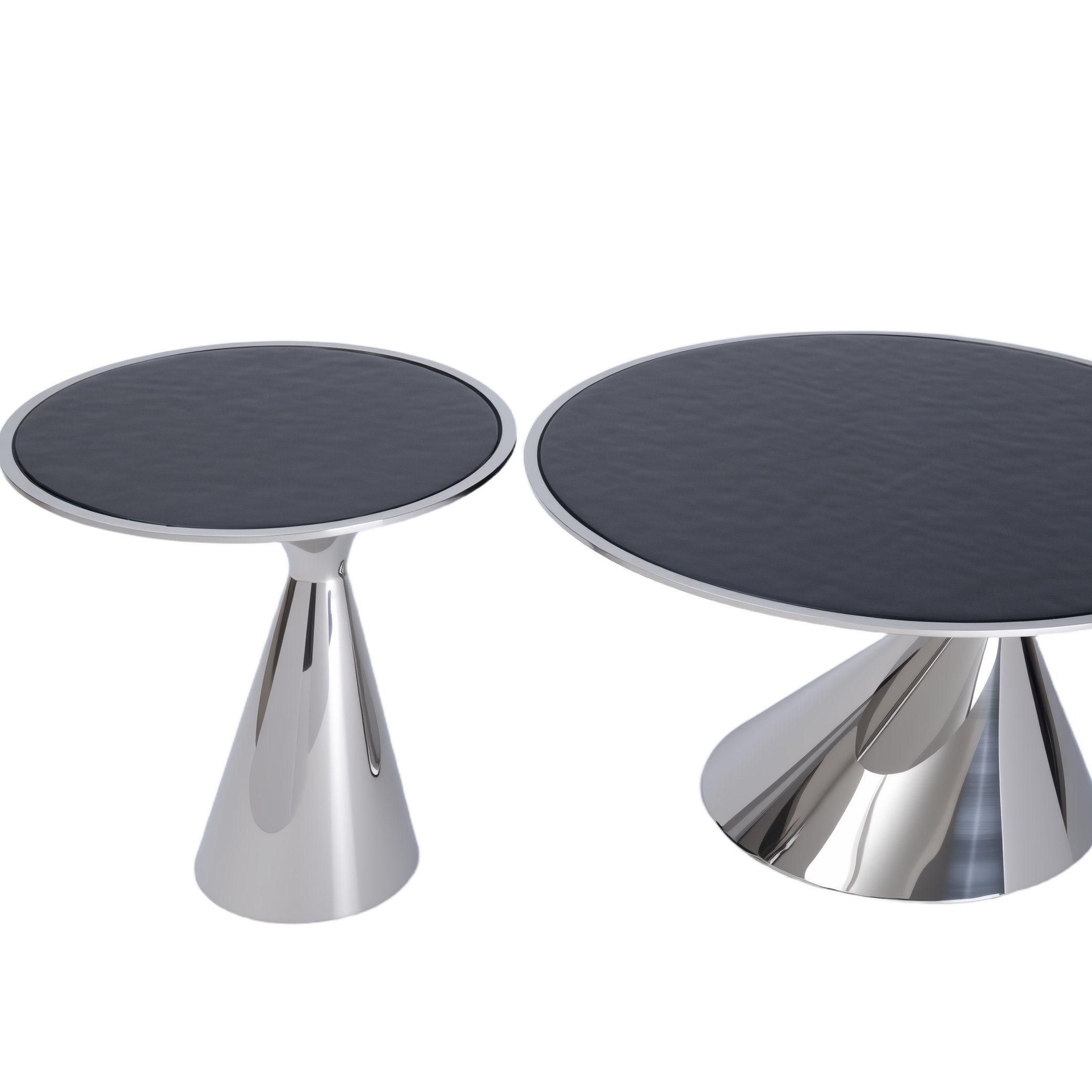
Furniture with brushed or polished metal details
Outdoor furniture designed for suitable environmental conditions
High-end furniture featuring exposed metal surfaces
One of its key advantages is that stainless steel can retain its natural metallic appearance without relying on a conventional decorative coating.
However, stainless steel generally costs more than standard carbon steel. Its corrosion resistance also depends on the grade, surface condition, exposure environment, and maintenance. For example, 304 and 316 stainless steel offer different levels of resistance to corrosive environments.
Aluminum is a lightweight metal valued for its relatively high strength-to-weight ratio, corrosion resistance, and flexibility in manufacturing.
Compared with steel, aluminum has a much lower density, making it particularly useful when furniture needs to be lightweight or easy to move.
Common applications include:
Outdoor chairs and table frames
Lightweight occasional tables
Portable and movable furniture
Die-cast furniture legs and connectors
Contemporary furniture with complex shapes
Aluminum can be extruded, cast, machined, and finished through processes such as powder coating or anodizing, depending on the alloy and product design.
However, aluminum is generally less stiff than steel of comparable geometry and may require thicker sections or carefully designed structural profiles to achieve the required rigidity. Its material and processing costs can also be higher in some applications.
The following table summarizes the main differences from a furniture manufacturing perspective.
| Feature | Steel | Stainless Steel | Aluminum |
|---|---|---|---|
| Strength | High | High, depending on grade | Moderate to high, depending on alloy and design |
| Weight | Heavy | Heavy | Lightweight |
| Corrosion resistance | Low without protection | Generally high | Generally good due to its oxide layer |
| Material cost | Generally lower | Generally higher | Varies by alloy and market |
| Welding | Widely established processes | Requires suitable procedures | Requires alloy-specific expertise |
| Surface finishing | Powder coating, plating, painting | Brushed, polished, passivation and other suitable finishes | Powder coating, anodizing and other suitable finishes |
| Design flexibility | Excellent for sheet-metal and welded structures | Excellent for exposed metal details and premium designs | Excellent for lightweight and cast components |
| Maintenance | Depends on protective finish | Generally easy to maintain | Generally easy to maintain |
| Typical furniture use | Frames, cabinets, tables, shelving | Premium furniture and moisture-exposed applications | Outdoor furniture, lightweight frames and cast legs |
Important: Material performance depends on the exact grade, thickness, geometry, manufacturing process, finish, and service environment. No single metal is automatically the strongest, most durable, or most cost-effective choice for every furniture design.
Strength is often a primary consideration when selecting materials for furniture frames, table legs, chairs, and storage products.
Steel is frequently the first choice when high structural strength, stiffness, and efficient material use are important. It is especially suitable for furniture that requires slim profiles, rigid frames, or welded structural components.
Stainless steel can also provide excellent structural performance, but its mechanical properties vary by grade. It should not be assumed to outperform every type of carbon steel.
Aluminum can provide sufficient strength for many furniture applications, particularly when the frame geometry, alloy, wall thickness, and connections are properly engineered.
For example, a steel table frame may be suitable for a design requiring high rigidity and relatively slender legs. An aluminum frame may be preferable when reducing product weight is a priority.
When evaluating strength, buyers should consider more than the material name. Load capacity, deflection, joint strength, wall thickness, and product stability all influence the performance of the finished furniture.
Manufacturing tip: Structural testing on a representative finished product is often more useful than comparing material properties alone.
Corrosion resistance becomes particularly important when furniture is used outdoors, in kitchens, in hospitality environments, or in areas with high humidity.
Carbon steel requires an appropriate protective system to resist corrosion. Depending on the application, this may include cleaning, pretreatment, powder coating, painting, or other protective processes.
Coating quality and edge coverage matter. Scratches, damaged coatings, and poorly protected joints can create vulnerable areas.
Stainless steel offers inherent corrosion resistance through its chromium-rich passive layer. It is a strong candidate for furniture with exposed metal surfaces or frequent cleaning requirements.
However, stainless steel is not completely rust-proof. Chlorides, salt exposure, unsuitable cleaning chemicals, and unfavorable conditions can cause corrosion. Selecting the correct grade is especially important for coastal or demanding outdoor environments.
Aluminum naturally forms a protective oxide layer, which helps it resist corrosion. Additional finishes, including anodizing or powder coating, can provide further protection or improve appearance.
Nevertheless, aluminum alloys can still experience corrosion under certain conditions, particularly where dissimilar metals, trapped moisture, or aggressive environments are involved.
Which should you choose?
For cost-conscious indoor furniture: coated steel is often a practical choice.
For furniture requiring an exposed metallic finish and good corrosion resistance: stainless steel may be appropriate.
For lightweight outdoor furniture: aluminum is often worth considering, provided the alloy, finish, and design suit the environment.
For any outdoor application, evaluate the complete product system rather than relying on the material alone.
The cheapest raw material does not necessarily result in the lowest total manufacturing cost.
When comparing steel, stainless steel, and aluminum, buyers should consider the full production process, including material consumption, fabrication, welding, surface finishing, assembly, packaging, transportation, and expected maintenance.
Steel often offers an attractive balance between structural performance and material cost. It is widely available and well suited to established fabrication processes.
For powder-coated tables, cabinets, shelving systems, and other indoor furniture, steel can be an economical option without sacrificing design flexibility.
Stainless steel usually carries a higher material cost than standard carbon steel. Fabrication requirements and the desired surface finish can also affect the final price.
However, the premium may be justified when the design depends on the natural appearance of the metal or when its corrosion resistance provides meaningful functional value.
Aluminum pricing depends on the alloy, market conditions, manufacturing method, and component geometry.
Although its low weight can reduce handling and shipping weight, the final cost may increase if the design requires thicker profiles, specialized tooling, casting, or additional processing.
For an accurate comparison, furniture buyers should request quotations based on the same product specifications, performance requirements, finish, and order quantity.
The surface finish plays a major role in the appearance, corrosion protection, and perceived quality of metal furniture.
Different metals offer different finishing possibilities.
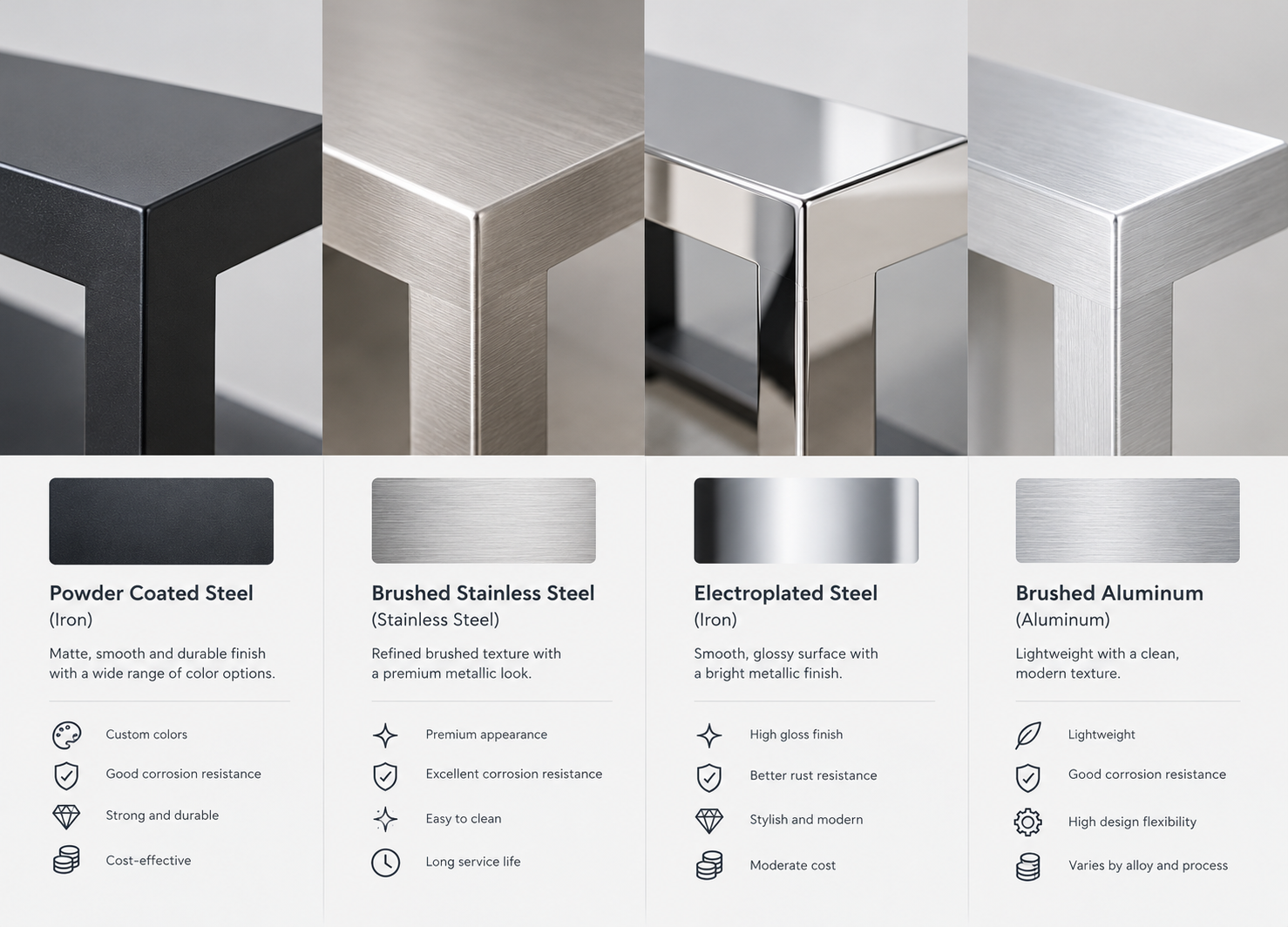
Powder coating is widely used on steel and aluminum furniture. It offers a broad selection of colors, gloss levels, and textures, including matte black, fine texture, and other custom finishes.
For carbon steel, the pretreatment process is particularly important because it helps the coating adhere properly and supports corrosion protection.
Brushed stainless steel creates a refined, linear texture that complements contemporary and premium furniture designs.
The direction and consistency of the brushing influence the final appearance. Handling, fabrication, and cleaning should be controlled to minimize visible scratches and surface defects.
Polished finishes provide a brighter, more reflective appearance. They are often used when the metal itself is an important part of the product's visual identity.
The required polishing level can affect production time and cost.
Anodizing creates a controlled oxide layer on aluminum. It can improve surface durability and provide different visual effects, depending on the process and alloy.
Powder coating is another option when a particular color or surface appearance is required.
Ultimately, the best finish depends on the intended use, aesthetic requirements, corrosion exposure, and maintenance expectations.
There is no universal winner. The most suitable material depends on the furniture category and its functional requirements.
| Furniture Type | Material to Consider | Why |
|---|---|---|
| Indoor coffee tables | Steel | Rigid structures and versatile finishes |
| Bedside cabinets | Steel | Suitable for sheet-metal fabrication and powder coating |
| Premium side tables | Stainless steel or steel | Choice depends on the desired metallic appearance and budget |
| Lightweight outdoor chairs | Aluminum | Lower weight and good potential corrosion resistance |
| Dining table frames | Steel, stainless steel, or aluminum | Depends on span, load, appearance, and weight |
| Modular storage systems | Steel | Well suited to laser cutting, bending, and repeatable production |
| Hospitality furniture | Depends on the environment | Cleaning, durability, maintenance, and design requirements all matter |
These are starting points rather than fixed rules. A well-engineered steel product can perform very well in many applications, while stainless steel or aluminum may offer specific advantages when the design or environment calls for them.
Choosing the right material is only one part of developing a successful furniture product. The manufacturer's technical capability and quality-control processes are equally important.
When evaluating a metal furniture supplier, consider the following factors.
1. Material selection and traceability
The supplier should understand the required metal grade, thickness, mechanical properties, and intended application. Material specifications should be clearly documented.
2. Fabrication capability
Processes such as laser cutting, CNC machining, bending, welding, grinding, and assembly must be suitable for the product design and required tolerances.
3. Surface treatment
Ask how the manufacturer handles pretreatment, coating application, finish consistency, and corrosion protection. A visually attractive finish should also meet the product's functional requirements.
4. Quality control and testing
Depending on the product, inspection may include dimensional checks, weld inspections, coating appearance checks, load-bearing tests, packaging evaluations, and corrosion testing where required.
5. Sampling and production consistency
A clear sample approval process helps align expectations before mass production. The approved sample, drawings, material specifications, and finish standards should be used as references during manufacturing.
6. Packaging and transportation
Metal furniture can be vulnerable to scratches, dents, and coating damage during handling and shipping. Packaging design should reflect the product's weight, shape, surface finish, and transportation conditions.
Working with a manufacturer that understands both material properties and production processes can help reduce development risks and improve consistency across production batches.
At Notable Progress Co., Ltd., we specialize in metal furniture manufacturing, supporting product development and OEM projects for furniture brands and commercial customers.
Our manufacturing capabilities include laser cutting, CNC machining, metal bending, welding, grinding, and surface finishing. Depending on the product design, we can also coordinate components made from materials such as wood, marble, and glass.
We understand that material selection is not simply a question of choosing the cheapest metal. The right decision must balance design intent, structural requirements, finish quality, production feasibility, and overall cost.
For each project, we work with customers to clarify material specifications, review drawings, evaluate finishing options, and confirm samples before moving into mass production.
Whether you are developing a powder-coated steel cabinet, a brushed stainless steel table, or a lightweight aluminum furniture component, early communication between the brand and manufacturer can make the development process more efficient.
If you are planning a new metal furniture collection or looking for an OEM manufacturing partner, we welcome the opportunity to discuss your requirements.
Steel, stainless steel, and aluminum each offer valuable advantages.
Choose steel when strength, structural rigidity, design flexibility, and cost efficiency are key priorities.
Choose stainless steel when corrosion resistance and a refined exposed-metal appearance are important.
Choose aluminum when low weight, corrosion resistance, and design flexibility are central to the product requirements.
The best material is the one that meets the product's functional, aesthetic, and commercial objectives without unnecessary cost or complexity.
By evaluating the application, environment, structural design, surface finish, and manufacturing process together, furniture brands can make better material decisions and develop products that perform well throughout their service life.
Looking for a reliable metal furniture manufacturing partner?
Contact Notable Progress Co., Ltd. to discuss your drawings, material requirements, finishing options, and OEM furniture development project.
Is steel or aluminum better for furniture?
Steel is generally preferable when high stiffness and cost-effective structural fabrication are priorities. Aluminum is often preferable when reducing weight is important. The better choice depends on the design and performance requirements.
Does stainless steel rust?
Yes, stainless steel can corrode under certain conditions. Its resistance depends on the grade, environment, surface condition, and maintenance. Selecting the appropriate grade is important for demanding applications.
Is powder-coated steel suitable for outdoor furniture?
It can be suitable when the steel, pretreatment, coating system, drainage design, and corrosion protection are appropriate for the outdoor environment. Additional protection may be necessary for demanding conditions.
Which metal is best for premium furniture?
There is no single best material. Stainless steel can provide a premium exposed-metal appearance, while powder-coated steel and finished aluminum can also deliver high-quality results. The choice depends on the intended design and use.
How can I choose the right metal for my furniture project?
Start by defining the intended environment, load requirements, target weight, desired appearance, expected service life, and target cost. A qualified manufacturer can then recommend suitable materials, finishes, and fabrication methods based on the product specifications.